
Taekwondo
Taekwondo Discipline, Strength and the Spirit of Excellence
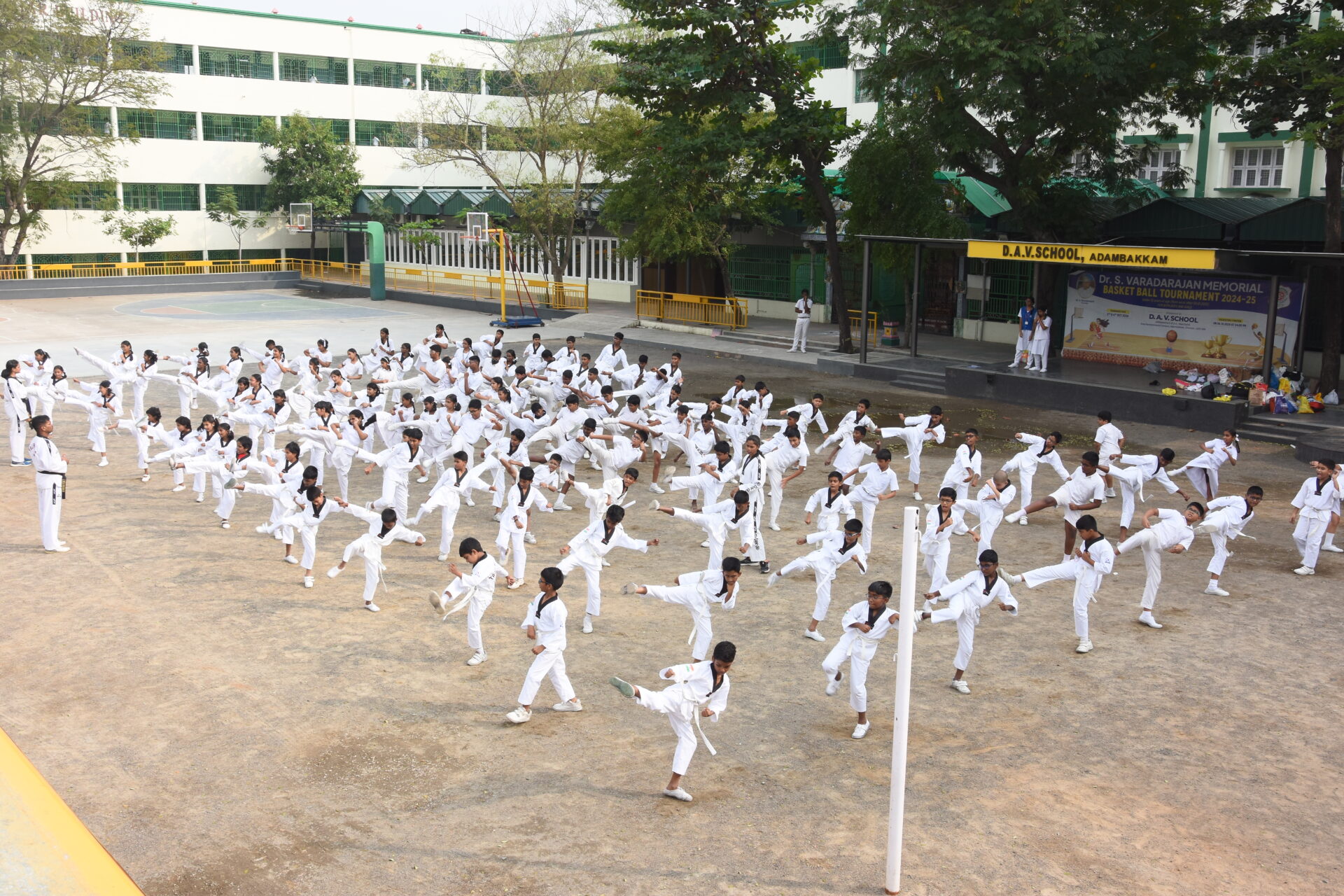
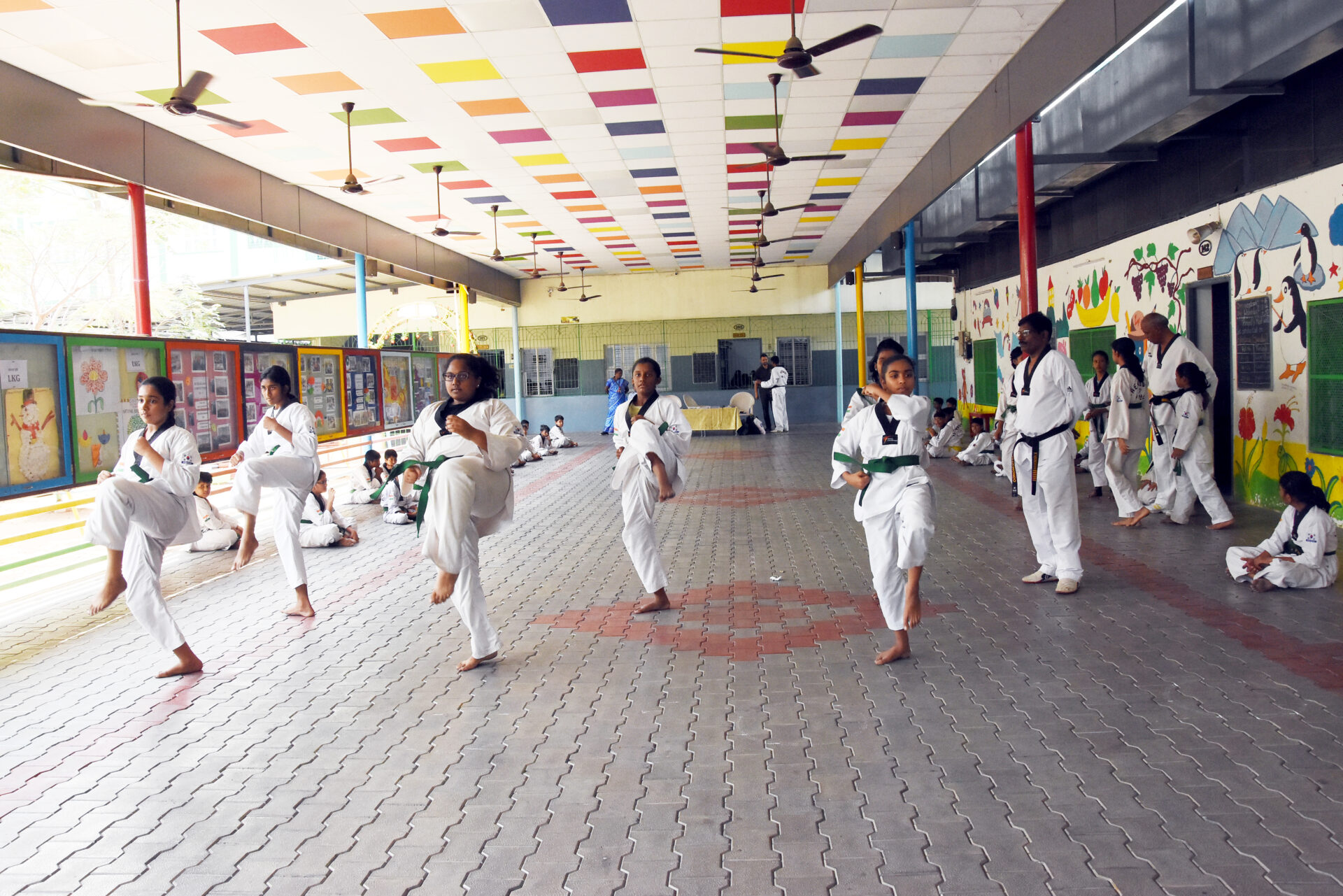
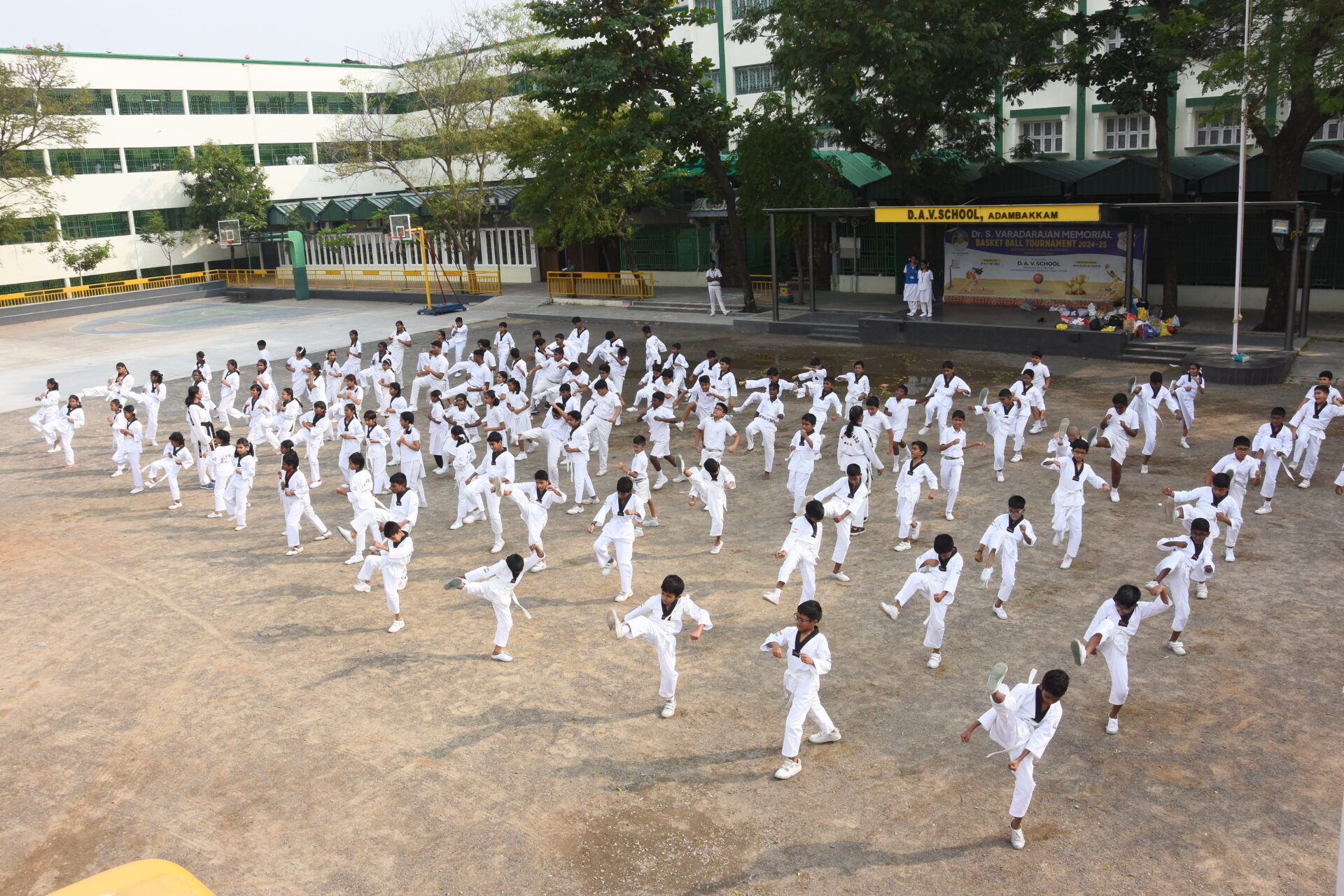
Taekwondo in D.A.V. training follows an Olympic-style coaching program that emphasizes discipline, athleticism and rigorous conditioning. Students are trained systematically to master basic stances, punches, kicks and blocks, fostering both physical ability and soft skills development.
Taekwondo, derived from the Korean words ‘Tae’ (strike with foot), ‘Kwon’ (strike with hand) and ‘Do’ (the art), instills five core values – courtesy, integrity, perseverance, self-control and indomitable spirit guiding students toward personal transformation and lifelong discipline.


Origin, Benefits and Empowerment
- Originating in South Korea, Taekwondo evolved as a sport in the 1950s, became an Olympic sport in 2000 and was later included in the Commonwealth Games in 2010.
- The practice strengthens agility, endurance and mental focus. It is especially empowering for girl students, helping build confidence, leadership qualities and self-discipline, with long-lasting physical and emotional benefits.
Training, Safety and Progression
- Students wear a dobok (uniform) with belts indicating rank. During sparring, mandatory safety equipment including padded helmets and protectors for hands, feet, shins, forearms and groin are used. In the ITF tradition, padding is typically limited to hands and feet.
- Learners undergo periodic evaluations and are awarded colour belts based on performance. With dedication and perseverance, students may progress to the Black Belt level and, over time, achieve the status of Grand Master.